
English is currently a fundamental requirement for many professionals across the globe. We often refer to “International English” as the most spoken language because it is the bridge used by non-native speakers to communicate. There are many reasons why we need English today: working within international teams, conducting cross-border business, or navigating the global tourism industry.
I have studied English since I was four years old. Throughout my career, I have worked for multinational companies where English is the official language. In fact, there are certain professional topics where I feel more comfortable speaking a non-native language than my own. Additionally, I have learned other languages because English is not always sufficient when living or working abroad for extended periods.
I would say I like languages.
It is interesting to observe the dissonance that occurs when you are in a country where English is not the primary language, yet you must operate within an English-speaking professional bubble. Recently, in our office in Parma, I saw notes from colleagues reminding themselves that work topics must be discussed in English, while social interactions could return to Italian. This triggered the idea of this post.

How Will Artificial Intelligence Change the Landscape?
I have thought about this topic frequently, as AI evolves faster and better. Will languages remain important as the wave of Artificial Intelligence continues to grow? To provide some context and build some ethos, I want to reference the World Economic Forum report on future essential skills. Interestingly, multilingualism is viewed as an “out-of-focus” skill, and even today, it is not a top priority for many employers. That is not my perception in non-Native English countries, so there might be some bias in the report.
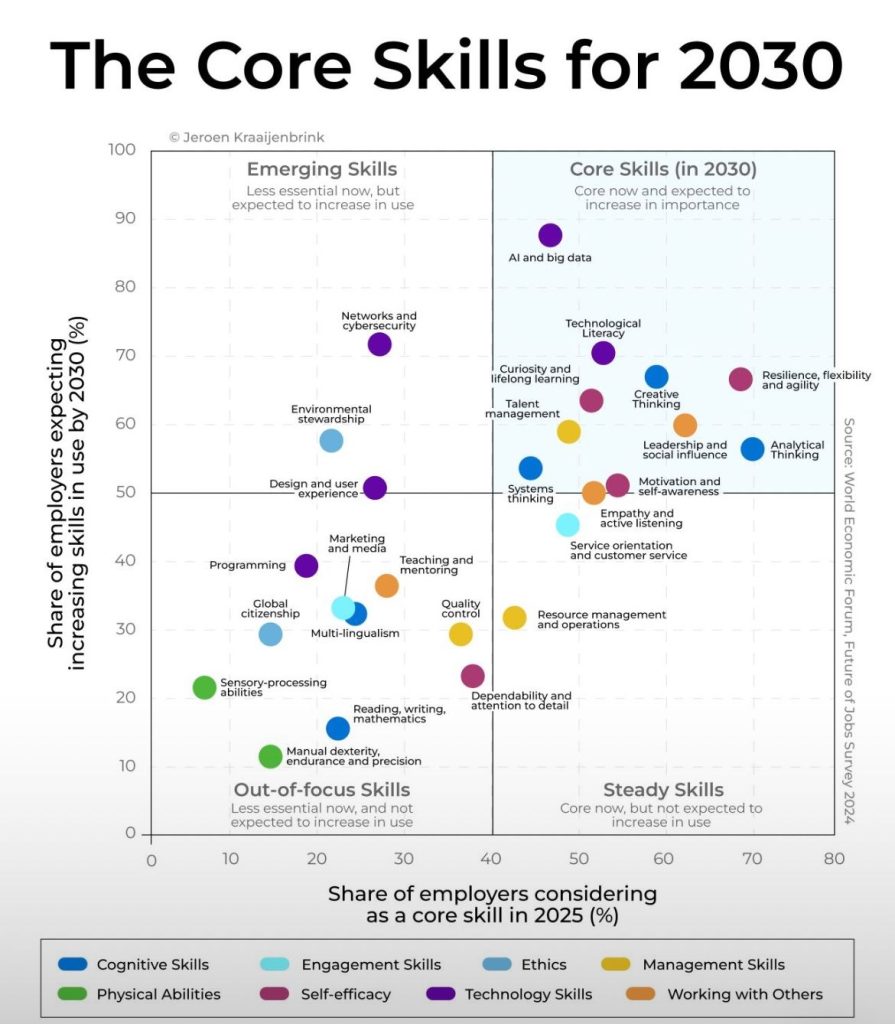
My opinion aligns with the World Economic Forum, although I foresee an even stronger decrease in the need for languages in certain areas. I believe that Artificial Intelligence will soon handle most operational and transactional activities. Individuals who primarily send emails, use chat platforms, or attend reporting meetings will likely not need to master English. Technology will provide real-time, two-way translation much sooner than we expect, and that will be good enough.
Why We Should Still Learn Languages
If technology can translate for us, should we stop teaching languages to our children? Should we clear that space in our minds for other skills? I believe the answer is no. Languages will remain vital for two primary reasons:
1. Connection and Persuasion
It is significantly less effective to persuade someone through a translator than it is to speak to them directly. Connection happens at a different level when you share a common language. There is a famous sentiment that if you talk to a man in a language he understands, that goes to his head; if you talk to him in his own language, that goes to his heart.
- Trust Building: Establishing trust is faster and more effective when using a local language rather than a machine or a third language.
- Leadership and Sales: For any role involving leadership or negotiation, language skills will continue to be a significant advantage.
2. Cognitive Diversity
As Lera Boroditsky explains in her insightful TED Talk, languages shape the way we think.
- Thinking Schemas: The more languages you speak, the more frameworks you have for processing information.
- Problem Solving: A team with multiple languages brings different perspectives, which leads to better problem-solving and innovation.
- Broad Definitions: This diversity is not limited to spoken tongues; music and programming are also languages that contribute to this cognitive wealth.

Final Reflections
Perhaps I am being too optimistic about the evolution of technology, or perhaps I am overestimating the value of human connection in the future. However, I am convinced that while machines will handle the “what” of our communication, humans will still need languages to master the “how” and the “why.”
What do you think? Will you continue to invest time in learning new languages?

Leave a Reply