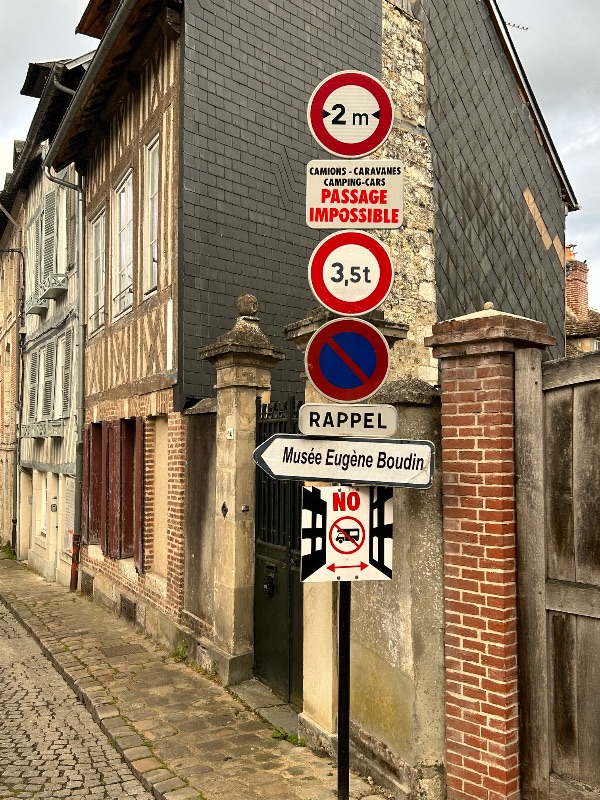
A few months ago, on a trip in Normandy, I came across a post with several signs. Three of them said essentially the same thing: narrow street ahead, your wide caravan will not fit. One used text. Another used data (2 metres). The third used a pictogram. The message was the same; only the format changed. The goal was clear: make sure every driver understands, whatever form is easiest for them.
Effective communication is a core aspiration for any speaker and leader. It becomes harder as audiences grow larger or more distant, for example over email. In those settings, it is difficult to know whether your message was understood as intended. This matters most when the message is meant to trigger action or build motivation.
This year I had the opportunity to attend the Gartner Supply Chain Conference, where stakeholder communication was one of the key topics. According to Gartner’s research, many CSCOs struggle to communicate effectively with other CxOs. If this is true at that level, imagine the levels below. In Supply Chain, we tend to speak our own language, full of technicalities. Everyone else then has to translate our message into what it means for them.
Are we thinking about our audience, or are we just talking to ourselves?
At university, I studied the Shannon-Weaver model of communication. Apart from the message itself, its core elements are:
- Emitter (source)
- Receiver (destination)
- Channel (meeting, phone call, email)
- Code (language, format)
Once the emitter and the receiver are clear, there are three levers left to optimize effectiveness: the channel, the code and the message.
1. Channel
How should we convey this information: an email, a call, a face-to-face meeting?
This week I chose the wrong option. I organized a kick-off meeting with a large group of people for a fairly operational activity. I expected questions, even some push-back. Instead, I spoke for 8 minutes and closed the call. No questions, everyone nodding. My final comment was: “This meeting should have been an email.”
More time and more contact are not always the most efficient approach.
2. Code
How we transmit the message is just as important. Some people prefer numbers; others prefer stories. Some are visual; others are auditory.
Which code should you choose for a diverse audience? Probably all of them. Like the village with three signs for one message, we may need several formats to convey the same information:
- A graph works well for some people.
- A single conclusive number works for others.
- A third group needs the words around the message.
Slides still dominate the corporate world. Do not compromise on them. Include the number, the graph and a narrative to maximize your success rate.
3. Message
This is the most important lever. Are we telling our own story, talking about our problems, our KPIs and our day-to-day successes? Or are we adapting all of that so it is relevant to our audience?
Sourcing offers a good example. In most companies, our main KPI is Savings. It is so important that we split it into positive savings and negative savings. “Negative savings” simply means anything that works against our KPI.
Using that term with other stakeholders is not adapting the message. For them, it is a price or cost increase, a headwind if it comes from the market, a risk mitigation cost, or something along those lines. It is only two words, but it is worth several basis points of communication effectiveness.
The key takeaway: use their words, their KPIs, their terminology. When communicating, it is always about them.
Do you have other good examples of choosing the wrong channel, code or message?