
Do you ever stop and think about the huge amount of people and effort needed for things to be the way they are?
From simple daily conveniences to major human breakthroughs, the realization of our interdependence is often breathtaking.
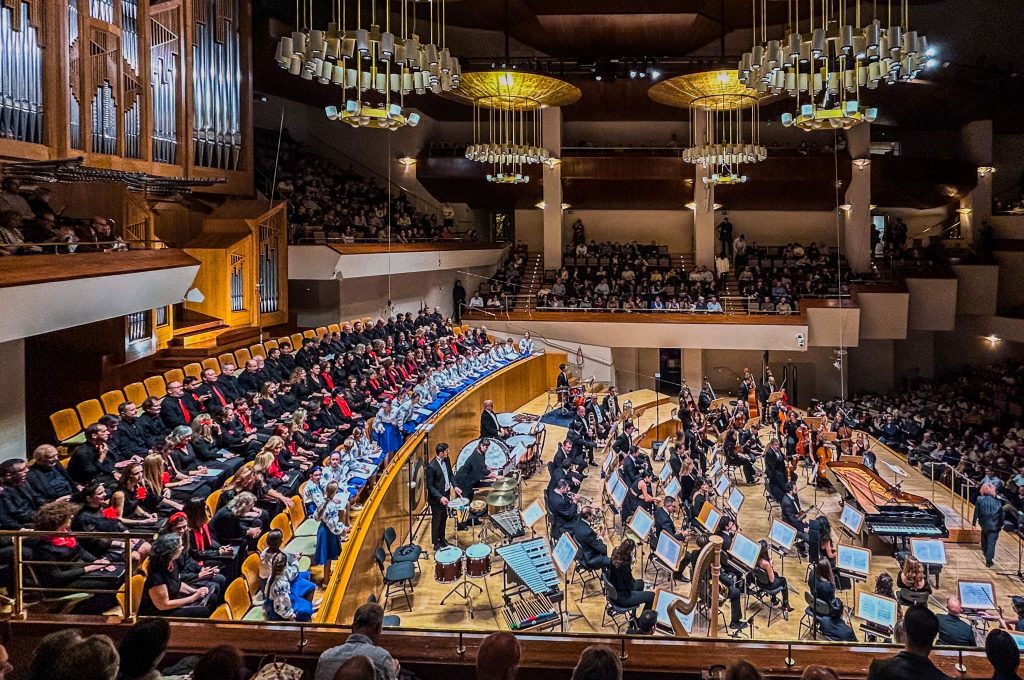
I recently experienced a moment of this type of reflection at the National Auditorium in Madrid. I attended a concert and stopped for a second to realize what a massive, precise human synchronization effort was taking place before my eyes.
The Power of Synchronization
There were two choruses, a full orchestra, multiple directors, and many soloists. More than 100 people were present, yet they were all sounding as one.
I am far from being a music expert—really, really far!—but I recognize quality when I see it. This time, the brilliance came not from a single star, but from perfect synchronization and joint effort.
In our current obsession with individualism and immediate results, we often focus too much on what we “drive” or “lead” as single players. Nevertheless, the most complex and highest-quality achievements always depend on three key elements.
3 Pillars of Collective Success
Just like a symphony, business excellence relies on these dynamics:
- Trust over Micromanagement: The flutist cannot constantly check on the cellist. They must trust each other to execute their specialized role flawlessly and on time. In business, trust is the tempo. We destroy collective harmony when we micromanage instead of empowering our departments, partners, and teams.
- The Subordination of Ego: A moment of individual brilliance must always serve the overarching composition. If a player decides to play louder or faster to “stand out,” the entire piece is ruined. Quality requires that every personal contribution serves the shared vision first.
- Long-Term Mastery vs. Immediate Shortcuts: The director mentioned years of work on a new opera, just as acclaimed albums take years of deep, focused effort. Nothing this complex and beautiful is created by coincidence or by taking a shortcut. Excellence is an investment of time, not a quick transaction.
The Business Takeaway
Think about our modern “orchestras.” Consider your organization’s multiple departments—Sales, Product, Finance—and your complex supply chains.
If we want world-class results, we must ensure every player is synchronized, trusted, and committed to the long-term, shared composition.
Where are you focusing your efforts nowadays? Are you promoting synchronization, or are you just controlling individual output?
Where does the real magic happen?
Leave a Reply